One-2-One Tutoring

t: 07854 507760
e: info@one-2-onetutoring.co.uk
  • E-mail
  • Facebook
  • Instagram
  • LinkedIn
  • Home
  • About Us
  • Tuition
    • Home Tutoring
    • Common Entrance Exams
    • Art Classes
    • Computer Tuition
    • Online Tutoring
    • Dyslexic Package
  • Home schooling
    • Design Your Learning
    • Educational Videos
    • Usborne Books
  • Testimonials
  • Contact Us
  • News

Look after yourself!

21st May 2019 by Patrice Heaney

Sorry for the demanding header; but I have seen so many GCSE students burning the candle at both ends and they’ve only just started the full flow of exams recently. They are so anxious, feeling so drained and tired, and they are already getting run down… and we haven’t even got half way through the exams yet.

It stresses me out seeing students like this! You can see how much pressure they are under and how they beat themselves up about not revising enough.

The worse thing to do around exams is over revise and staying up late the night before the exam, trying to cram in last minute information. It concerns me that students are not looking after their mental health at this critical time in their life.

Sometimes taking a step back, taking a breather and having a short break isn’t the worse thing in the world!

Here are some helpful tips to keep your mind in check:

  1. Download “headspace” on your phone; it’s a meditation app which allows you to unwind 10 minutes a day and it helps take the stress away.
  2. If you have a furry friend at home; take them for stroll and get some fresh air for yourself and BREATHE (your furry friend will love it too).
  3. Each day, write down one positive thing that made you smile and feel great about your day. It’ll keep you feeling optimistic!
  4. Do something that you love, whether that’s listening to your favourite song and having a boogie, or going for a short jog.

Remember kids, your well being is top priority over anything else. If you’re not fit and mentally well-rested, then all of your studying could be for nothing.

Filed Under: News

Why has Home Tutoring become more and more popular?

11th December 2017 by Patrice Heaney

Being a private tutor, I have noticed a vast amount of home tutoring inquiries I’ve had from many parents over the years. It’s become more and more popular for parents to seek additional teaching support outside of school for their children. Many ask why they should invest yet more money in their children’s education at home, when they should be getting their support in education at their Schools.

This is why I’m writing this blog to all the parents out there; explaining the reasons of why tutors have become a great impact on their child’s learning and why it’s become more popular.

Private tuition is as old as education itself. Let’s revisit the history behind tutoring – Any student of philosophy knows that Socrates tutored Plato, who tutored Aristotle, himself tutor to the young Alexander the Great, and, even the Romans were just as fond of tutoring as the Greeks. Tuition has long been seen as the most effective way to support a child’s education, providing them with a personal mentor and role model as well as a teacher.

Today private tuition has lost none of its popularity. It’s estimated that around a quarter of children in the UK receive tuition at some point; predominately due to important tests/exams – SATs, Entrance Exams and GCSE. But parents get tutors in for many reasons, which i’m going to highlight below.

The main reasons I have noticed an increase in the past couple of years are:

  1. To boost their confidence and self-esteem.
  2. To help with the anxiety of school homework and deadlines.
  3. To make sure their child don’t fall behind in school or they are falling behind in school.
  4. To show them different ways to learn a topic, instead of the one way that the school may only show.
  5. To get expert support for revision and preparation for upcoming exams.
  6. To make life easier for parents, due to children arguing with their parents and the frustration parents feel.
  7. To give the support/advice to parents with their child’s learning.
  8. To generate positive reinforcement for the child.

Unfortunately schools are under a lot of pressure with paperwork (admin for the Managers and Ofsted) and their trying their best to give all the support a child needs in the classroom. Sadly, our education system is stretched to it’s maximum at present and we don’t know if it’ll change anytime soon due to the funding from the Government.

But, whatever your reasons may be as a parent; tutors are here to support you and your child whenever you may need them. Don’t forget, us tutors are flexible and we work around what you can potentially do for your child’s education.


Filed Under: News

The benefits of engaging with your child more and how it helps with their development.

30th October 2017 by Patrice Heaney

I have recently read a Metro Article about an advertisement on children wanting to be noticed more by their parents.

The purpose of the digital billboard advert is to make parents aware that they need to ditch technology and interact with their children more.

Read more here

However, it’s had mixed reviews from residents in Middlesborough, because of the caption underneath the image stating: “Help me be ready for nursery. Playing with me helps me learn to take turns and concentrate. It makes me feel special”. Some residents have deemed this campaign as “strange” and “weird” and how it’s not appropriate to tell parents what to do with their children. Whilst others are welcoming the campaign, as it’ll give some parents a wake-up call that they needed.

It’s caused quite a controversy about this poster, but the purpose of the campaign is to create awareness of the benefits of communicating with your children at a young age and how it develops their language skills.

It’s incredibly important to develop their language through chatting together, because it extends an inquiring mind, aids them to become precursor to learning and encouraging curiosity and questioning. Additionally, it builds their social awareness through the shared observation and interaction with others; plus how to recognise boundaries with other children around their age group. Communicating enhances mental stimulation engagement and aids them to be aware of the world around them.

The interactions between parent and child throughout their childhood till they become young adults; it continually builds skills and cultivates a learning and developing brain. It’s important that parents understand how vital it can be to interact with their child, because it’ll help with their progress in learning and development.


Filed Under: News

MINDFULNESS EXERCISES FOR STUDENTS GOING THROUGH EXAM SEASONS.

19th April 2017 by Patrice Heaney

Are you revising, feeling stressed out and under pressure with exams coming up? Taking a mindful moment can do you some wonders – it’ll help you concentrate and focus better, it’ll help your immune system and helps to switch your nervous system out of flight/fight mode and it’ll give you an all round sense of calmness.

It is essential for our well-being to take a few minutes each day to find some mental space and to nurture a positive mind-body balance.

Try using these simple, practical mindfulness exercises to empty your mind and reducing stress and anxiety.

1. ONE MINUTE BREATHING
This exercise can be done anywhere at any time, standing up or sitting down. All you have to do is focus on your breath for just one minute. Start by breathing in and out slowly, holding your breath for a count of six once you’ve inhaled. Then breathe out slowly, letting the breath flow effortlessly out back into the atmosphere.Naturally your mind will try and wander amidst the valleys of its thoughts, but simply notice these thoughts, let them be for what they are and return to focusing on your breath. Literally watch your breath with your senses as it enters your body and fills you with life, and then watch it work its way up and out of your body as the energy dissipates into the universe.

2. A GAME OF FIVES
In this mindfulness exercise, all you have to do is notice five things in your day that usually go unnoticed and unappreciated. These could be things you hear, smell, feel or see. For example, might see the walls of your front room, hear the birds in the tree outside in the morning, feel your clothes on your skin as you walk to work, or smell the flowers in the park, but are you truly aware of these things and the connections they have with the world? Are you aware of how these things really benefit your life and the lives of others? Do you really know what these look and sound like? Have you ever noticed their finer, more intricate details? Have you thought about what life might be without these things? Have you thought about how amazing these things are? Let your creative mind explore the wonder, impact and possibilities these usually unnoticed things have on your life. Allow yourself to fall awake into the world and fully experience the environment.

3. A GRATITUDE NOTE A DAY
In this mindfulness exercise, all you have to simply do is write down what you appreciate and grateful for for each day. It can be simple things like enjoying your cuppa tea or hot chocolate in the morning, to having a lovely day or evening with family/friends. It’s easy to get caught up in the stresses of the world, especially when you have lots of subjects to revise for. Sometimes we need to refocus on one simple enjoyment each day we’ve encountered. Try it… it’s an amazing feeling!

4. COLOUR AT YOUR HEARTS CONTENT.
Finally, don’t forget to try out mindful colouring in! It does wonders! Even if you colour in for ten minutes in between revising for different subjects; it’ll help unblock the mind and it’ll give your brain some down time. You can get lots of beautiful mindful colouring in books now – pop down to the book shop as soon as possible and choose your own.

By becoming mindful of who we are, where we are, what we are doing and the purpose, if any at all, and how everything else in our environment interacts with our being, we cultivate a truer awareness of being. This helps us learn to identify and reduce stress and anxiety and difficult, painful and perhaps frightening thoughts, feelings and sensations.

Mindfulness exercises help centre the mind and restore balance to our lives, tempering that “monkey mind” that persistently leaps from branch to branch. Rather than being led by thoughts and feelings, often influenced by past experiences and fears of future occurrences, we are able to live with full attention and purpose in the moment.

Filed Under: News

We need to bring FUN back into Learning!

15th March 2017 by Patrice Heaney

Our education system has become a joyless monster – we need to rediscover the FUN.

Enjoyment in the classrooms is central to excellent teaching and learning – but where has it all gone?

Due to the changes to the curriculum; teachers are so bogged down with constant paperwork, meeting the grading standards in the school and frequent team meetings, which in turn, they have lost the enjoyment of teaching.

Also, students are feeling the pressure of having to learn much more in their subjects, continuous exam papers and making sure they get their C and above in subjects in order to continue their studies at College or A Levels.

Unfortunately, driven by systems and structures and the need for accountability (the requirements from the Government), it has lost its core purpose of ensuring that learning is both fun and life-long. It has turned children off education. This is unacceptable.

Even teachers are not enjoying their professions and majority are leaving the system, because it’s not for them anymore.

Our education system need to re-structure our approach to education and learning, otherwise at this rate, our education in the UK will continue to fall apart.

We therefore need to revisit why we all wanted to become teachers in the first place and the purpose of learning.

Let’s rediscover FUN, and enthusiasm for learning, and the desire to change the younger generations minds and make them excited about subjects in school.


Filed Under: News

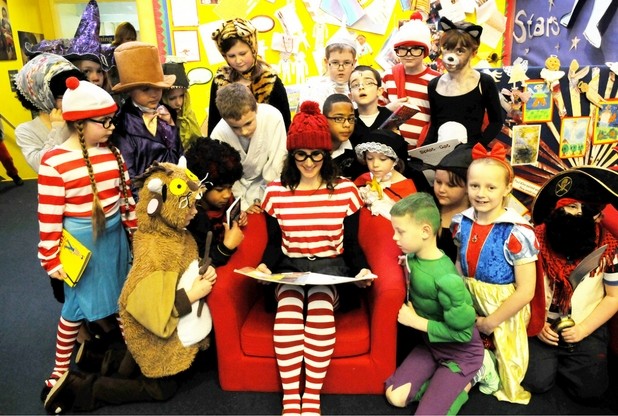
WORLD BOOK DAY 2017

2nd March 2017 by Patrice Heaney

It’s that time of year again to celebrate World Book Day – the 20th year it has been going!

Why is World Book Day so big in the UK?

The purpose of World Book Day is to celebrate authors, illustrators, books and most importantly, Reading.

But, for children, it’s the excitement of dressing up in a costume of their favourite character and seeing what characters their friends are being this year. It’s a day where everyone looks bright and colourful!

The importance of today is to encourage children to explore the pleasures of books and reading, and inspire children to be more creative.

Successful authors such as; Roald Dahl and J.K. Rowling were inspired into writing. Roald Dahl became interested in writing when he wrote about World War II when he was a pilot. Dahl’s children’s novels didn’t commence until he had children of his own and he became inspired by his children’s creative minds.

Whereas, J.K. Rowling became inspired to write Harry Potter, while she was delayed on a train from Manchester to London. This is why there was a magical train station in the first Harry Potter book.

World Book Day is about enjoying reading again and being inspired by their favourite authors. It’s about exploring the new possibility of their creative minds and maybe, one day, your child could be the next successful author.


Filed Under: News

‘Super-parenting’ improves children’s autism

2nd February 2017 by Patrice Heaney

Giving mums and dads the skills to become “super parents” can dramatically improve their child’s autism, a long-term study has shown.

I feel this study is amazing; it gives parents a chance to reflect on how they approach their autistic child and how they can improve on their relationship.

It’s all about entering their autistic child’s world and understand their way of being, because they cannot grasp or cope with our world.

Read more on this study: http://www.bbc.co.uk/news/health-37729095


Filed Under: News

Where do I go to revise for my GCSE’s?

26th January 2017 by Patrice Heaney


I’ve had alot of parents and students asking these frequent questions recently: “Is there any useful sites where my child can do extra revision”? and “Where can i do extra practice papers”?

So, I’ve decided to collate all the useful websites together to help you lovely students.

The best websites to help with English Revision are:

http://www.swotrevision.com/pages/gcse/englishlang.html

http://www.englishbiz.co.uk/

http://www.teachit.co.uk/armoore/

These sites will help with different areas of English: Writing tips, analysing and writing about Poetry, and how to plan effectively.

The best websites to help with Maths Revision are:

http://www.s-cool.co.uk/gcse/maths

http://studymaths.co.uk/

http://www.mathsgenie.co.uk/gcse.html

These sites will help with different areas of Maths: practice papers and answer papers, explanation videos, and mental maths test to help remember formulas.

Last but not least, this site helps in all aspect of GCSE subjects this year… BBC GCSE Bitesize.

http://www.bbc.co.uk/schools/gcsebitesize/

I hope these sites will help our lovely students in their preparation for GCSE’s.


Filed Under: News

Can you overcome Dyslexia?

14th January 2017 by Patrice Heaney


12189855_978955112148242_5476239422982629796_n

Can you overcome Dyslexia? Speaking from experience, as I have dyslexia myself… you don’t fully overcome it but you can put strategies and techniques in place to make life easier for yourself.

For example, I have bad memory due to my dyslexia so I have to write things down constantly, sometimes more than once in order for it to stay in my head. But, also writing things down stops me forgetting to do the important tasks.

Other aspects that are affected by my dyslexia are reading and writing – spelling especially. I have trouble reading texts because letters keep moving and spelling words is hard too. But I have put strategies in place; which has made things easier when it comes to reading or spelling in front of my students and my everyday life.

But I want to let my dyslexic students and anyone else who have dyslexia; that it does not stop you learning, doesn’t stop you concurring and achieving your goals. When I did my BA Honours Degree, I thought doing my 10,000 word dissertation was going to be impossible and i thought i was going to fail. At this point, i didn’t know and wasn’t diagnosed with dyslexia. But I was still dreading doing my dissertation, still struggling and was getting completely anxious every time i tried tackling it. Luckily, I had an amazing lecturer that helped me and had regular meetings with me to help structure my writing and proof read my spelling. And YES, i did achieve my 10,000 dissertation (picture is above) and got a 2:1 grading for my degree. I was so thrilled and over the moon. But what helped me to achieve this hurdle with my dissertation was determination, not giving up and having the right support around you.

Being dyslexic shouldn’t be a hinder to you, you are unique person and learn differently from everyone else. But doesn’t mean you cannot achieve your goal, because all you need is determination and that little voice in your head saying “i’m not going to give up” or “you are not going to beat me dyslexia”.

Dyslexia is well known now and there are so many opportunities around you that can help make things easier in your everyday life. But don’t forget, there are many brilliant, famous people that have achieved their goals and had dyslexia too. For instance Albert Einstein had dyslexia and he developed so much in Physics, Science of relativity.

Anything is possible! Having dyslexia doesn’t stop you achieving; it makes you unique, more determined, creative, fast problem solvers, intuitive, visual thinker and great communicator.

I’m going to round things up with a short video from BBC Education News. It’s the Formula 1 world champion, Sir Jackie Stewart talking about his dyslexia who says some wise words.

Click here: Sir Jackie Stewart


Filed Under: News

HELP! My Child is stressing about their upcoming GCSE Exams!

28th December 2016 by Patrice Heaney

fullsizerender-4

Is your child stressing about their upcoming GCSE Exams?

If your child is determined to get as many A-C grades as possible in their upcoming GCSE exams, they may be searching for better ways to revise for their exams to make sure they achieve them. Nothing beats hard-work, especially when it comes to studying, but there are ways they can guide their brain to remember information easier which supports their ability to learn.

Here are 6 revision and preparation tips to get your child started:

1). G.R.O.W – This stands for Goal, Reality, Obstacles and Will.

Get your child to write down their end goal and mini targets to get them there.

Reality – What are they currently doing to try and help themselves with GCSE Revision? What other ways can they do to maximize their knowledge and their time for revision? Who can help them with their learning? It’s about using the resources around them.

Obstacles – What will stop them achieving their targets and their main goal? Knock them out the way now before it becomes a problem.

Will – Will they do it? There may be times they are on track for revision and times where they have lost their way. But it’s all about refocusing them and that can happen through getting them to do: Visual Boards, Mind Maps and Cue Cards.

2). Exam Dates – Make this visual to everyone even your child and help them plan out how they are going to use their time to revise for their exam deadlines.

3). Create a Revision Timetable – Building a Revision Timetable can add structure to their revision and help them identify which GCSE subjects they need to prioritise to get better marks. Plus, creating a revision timetable is a great way to organise their study time and it will get them motivated.

4). Practice Makes Perfect – One of the biggest recommendations that GCSE students should be doing is going through as many past papers as they can. This will help them become familiar with the: Exam Format, Question Style, Time Pressure and Retrieve Information quicker.

5). Use Visual Boards and Mind Maps to connect your Ideas – If they find it difficult to remember tons of new study notes, Mind Maps and Visual Boards may be the key to improving their memory. The Theory behind Mind Mapping explains that making associations by connecting ideas helps you to memorise information easier and quicker.

6). Time frame – Do not allow them to revise one subject for hours on end. It doesn’t work – trust me! Your child’s attention span and retainment is 20 minutes. 20 minutes revision each day, for each subject is the best way to help with your child’s revision and retaining the information they need for their exams.

GCSE exams are just around the corner, let’s help them get organised and bring a stress free feeling to their revision schedule.

Filed Under: News

  • 1
  • 2
  • 3
  • 4
  • Next Page »

Unlocking your Child’s Potential

WHAT WE DO... One-2-One Tutoring is a tutoring service based in West Oxfordshire. We provide one-to-one Home Tutoring for Primary, Secondary and students with Learning Difficulties. We have these services coming soon - Online Tutoring, access to Purchasing Educational Books, Dyslexic and Autistic Packages, and … Read More...

Our latest News

  • Look after yourself!
  • Why has Home Tutoring become more and more popular?
  • The benefits of engaging with your child more and how it helps with their development.

Our Tuition Services

One-2-One Tutoring is a tutoring service based in West Oxfordshire. We provide One-to-One Home Tutoring and Online Tutoring sessions. We cover these academic subjects: English and Maths. We tutor in Primary, Secondary, Phonics Screening, SATs, GCSE's, ESL (English as a Second Language) and students with Learning Difficulties. We have these services coming soon - Group Sessions and an eBook on the benefits and challenges of Dyslexia. Read More

What we are about…

We provide a trusted, engaged and diverse Tutoring Service within West Oxfordshire. All our tutors are DBS Cleared, subject and teacher qualified, and up to date with the Curriculum knowledge. All lessons are taught in the comfort of your own home, and they will be treated equally and respectively by our tutors. Read More

Where we cover…

We cover most areas of West Oxfordshire: - Carterton - Brize Norton - Clanfield - Aston - Witney - Curbridge - Alvescot - Burford - Bampton - Hailey Read More

How to contact us

Please use the e-mail link above, phone us on 07854 507760 or connect with us using the Social Media buttons at the top of the site.

Copyright © 2026 · Terms Of Use · Privacy Policy · Navitas Websites Aylesbury